
 One cannot read the Christmas story found in the Gospel of Matthew without wincing at the atrocity of evil that occurs there. King Herod, warned by the Magi of his newly born replacement, slaughters the innocent. Jealous for his continuing reign, he has every male child, aged two and under, in Bethlehem and its vicinity murdered. Matthew identifies his massacre as fulfilling Jeremiah’s prophecy: “A voice is heard in Ramah, weeping and great mourning, Rachel weeping for her children and refusing to be comforted, because they are no more.” Matthew 2:18. But was Rachel, viewed here metaphorically as the nation of Israel, weeping over something more than this particular slaughter? And would an end to her tears ever come?
The real Rachel was the wife of Jacob, father of the twelve tribes of Israel. After experiencing great difficulty in giving birth to their second child, she died. Just before her death, she was encouraged by her midwife, who said, ““Don’t despair, for you have another son.” Genesis 35:17. Jacob named this son Benjamin. Afterward, he buried Rachel near the town of Ramah, where they had stopped as they journeyed toward Ephrath (Bethlehem), a village some eleven miles away. Flowing from the tragic nature of this event, Rachel’s tears would become a sign of Israel’s mourning.
Jeremiah’s use of Rachel’s tears was first intended to convey grief over Israel’s sin. The nation, birthed in part from her womb, had been exiled to Babylon. Jeremiah, himself sent as a captive, had been found by Israel’s conquerors in Ramah. His prophetic words above portrayed Rachel as weeping from there, still looking toward Bethlehem, as thousands of Jews were staged and carried off in defeat. Why had they been taken captive? Over many generations, through many kings and priesthoods, they had forsaken God, rebelling against him. He had allowed their exile to occur.
Hundred of years later, and after many captives had long since returned to her, Israel remained broken, both physically and spiritually. At the time of Jesus’ birth, she was still in desperate need of a Savior. So…we shouldn’t find it surprising that Rachel mourned again as another of her kings mortally stabbed her own babes and toddlers. Yet she truly need not have despaired. For another son had, indeed, been born to her. He was a Messiah, a deliverer. His name would be Jesus. And he would save the faithful found not only in her, but in all nations of the earth.
Admittedly, the ultimate salvation found in Jesus awaits us, with today being no different from the evil days of Herod. Innocents are still murdered by the guilty, in a variety of horrific manners. But Jesus will bring them justice. He will avenge all who are found not guilty through his sacrificial blood. Just as he determined to begin the Christmas story, so shall he bring its end. And upon that end, when he returns, Rachel’s weeping shall cease. So shall that of her children. For ‘He will wipe every tear from their eyes. There will be no more death’ or mourning or crying or pain, for the old order of things [will have] passed away.” Revelation 21:4. That will be one Merry Christmas!
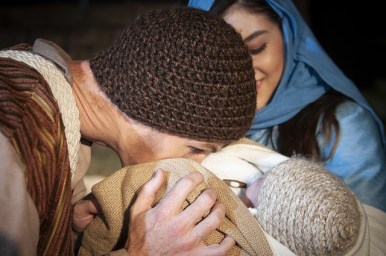 Did Joseph tell Mary he could find no decent room in Bethlehem for her to give birth? Or did she just know by the look on his face when he returned from the last place he’d tried? They had to be disappointed…and exhausted. They’d traveled a long way to the tiny village just to show up for a Roman census. Now, they faced resting with the livestock and placing a newborn into a feeding trough. No bassinet. Definitely no Pack-n-Play.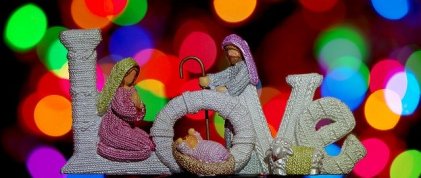
 George. Our family’s Thanksgiving turkey. Named after the First POTUS, he was a phenomenal bird. With every touch of my sharpened carving blade, he began to lay himself bare. Moist and tender, his flesh fell away…nearly to the bone. If only I’d had a double-edged sword! I must admit I chuckled as this routine, holiday endeavor brought to mind a passage of Scripture: “
 T-shirts. Jeans. Cardigans. Ankle boots. Little jewelry. Nothing fancy. These are the wardrobe choices I make to reflect my physical lifestyle at the moment. But what do I put on to portray who I am on the inside? What can I wear to convey the message of my heart? The Apostle Paul tells us to clothe ourselves with “
 As we enter into this season that recognizes our Savior’s birth, may we clothe ourselves with his very attitude. May we call upon our Heavenly Father, routinely asking for his help. May we stay in step with His Spirit, moving wherever He leads us. As we walk about the Kingdom, our new apparel will surely yield us ample opportunity to spread good tidings of great joy and a message of eternal hope!
  G r a z i n g U p w a r d